

Italian Ceppo di Gre Slabs Stock In Los Angeles
Current Slab Details
Finish: Honed
Available Sizes:
- B1 – 125″ x 60″ x 3/4″
- B2 – 111″ x 58″ x 3/4″
- B3 – 112″ x 58″ x 3/4″
- B4 – 112″ x 60″ x 3/4″
- B5 – 114″ x 61″ x 3/4″
Coverage: 44.71 to 52.08 sq. ft. per slab
Availability: Los Angeles / Van Nuys — call for current availability
About Ceppo di Gré
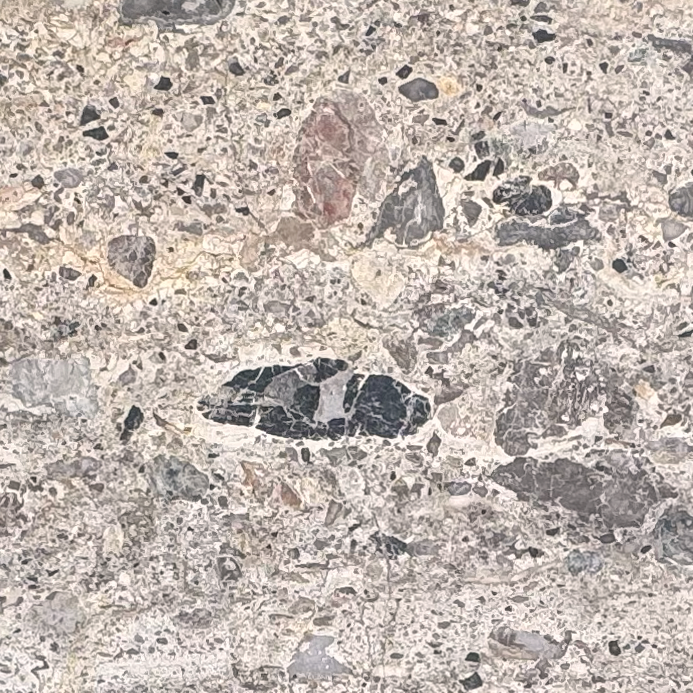
Ceppo di Gré is a distinctive natural stone from Lombardy in northern Italy, quarried near Gré on the western shore of Lake Iseo. Its appearance is immediately recognizable: a gray to blue-gray background filled with naturally occurring fragments ranging from fine particles to large, irregular inclusions. This variation gives the stone depth and movement while maintaining the neutral character that has made it a longstanding material in Italian architecture.
Although Ceppo di Gré is sometimes mistaken for terrazzo or an engineered surface, its characteristic aggregate-like appearance is entirely natural. The stone is a compact dolomitic breccia formed from fragments of varying sizes that were naturally deposited and cemented together over geological time. The result is a surface in which every slab has its own distribution of color, scale and pattern.
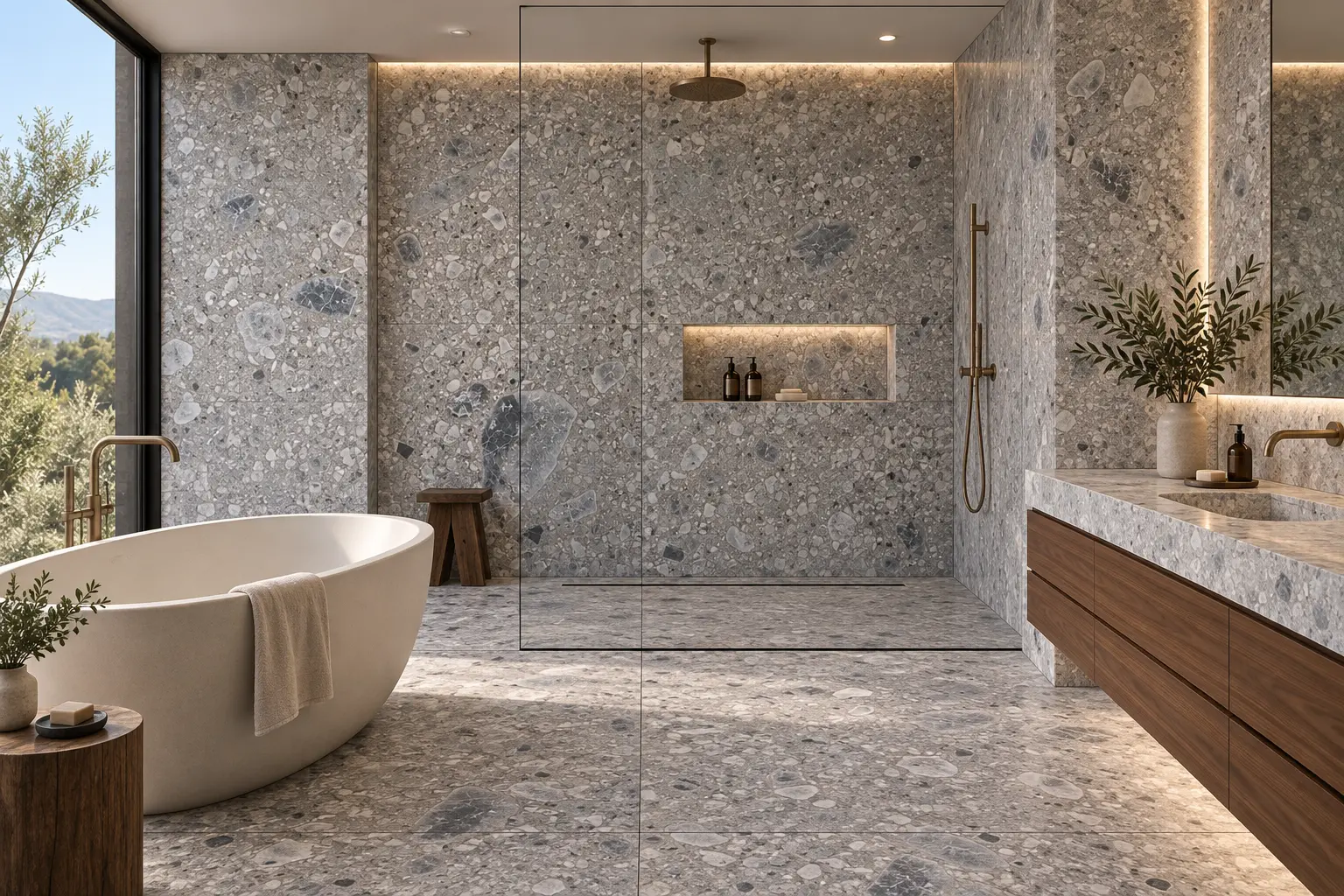
Ceppo di Gré works particularly well in contemporary architecture, where its complex texture can provide contrast to simpler materials such as wood, glass, metal and plaster. It can be used for flooring, wall cladding, bathrooms, fireplaces, countertops and custom architectural elements, allowing the same material to move from large architectural surfaces to detailed fabricated pieces.
The Character of Ceppo di Gré
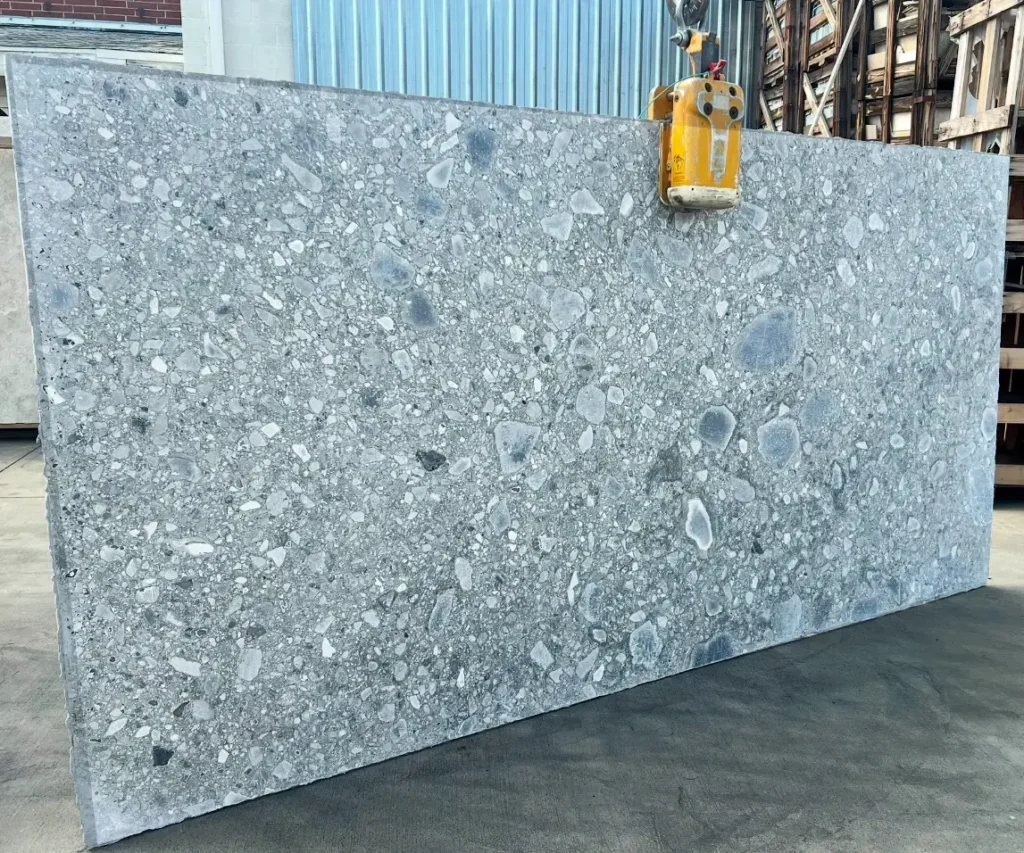
Ceppo di Gré is defined by its remarkable natural variation. Within a predominantly gray background are fragments ranging from very fine particles to large, irregular clasts, creating a surface with considerable depth and movement. Colors shift subtly between soft gray, blue-gray, charcoal and off-white, giving the stone a neutral overall appearance without becoming visually uniform.
The scale and distribution of the fragments can change noticeably across a single slab. Some areas are densely packed with smaller pieces, while others contain large, dramatic inclusions that immediately become focal points. These variations are an inherent part of the stone and should be considered when laying out wall panels, countertops, vanities and other fabricated pieces.
From a distance, Ceppo di Gré has a quiet, almost monolithic gray appearance. Up close, its complex geological structure becomes much more apparent. This combination makes it particularly effective in contemporary architecture: large installations can read as restrained and cohesive while still revealing intricate natural detail at closer range.
Its appearance is sometimes compared with terrazzo or exposed aggregate concrete, but the resemblance is purely visual. Ceppo di Gré is not manufactured—the fragments, matrix and seemingly random pattern were created naturally as ancient dolomitic debris accumulated and became cemented together over geological time. This natural irregularity is an essential part of the character of authentic Ceppo di Gré.
Where Is Ceppo di Gré Quarried?
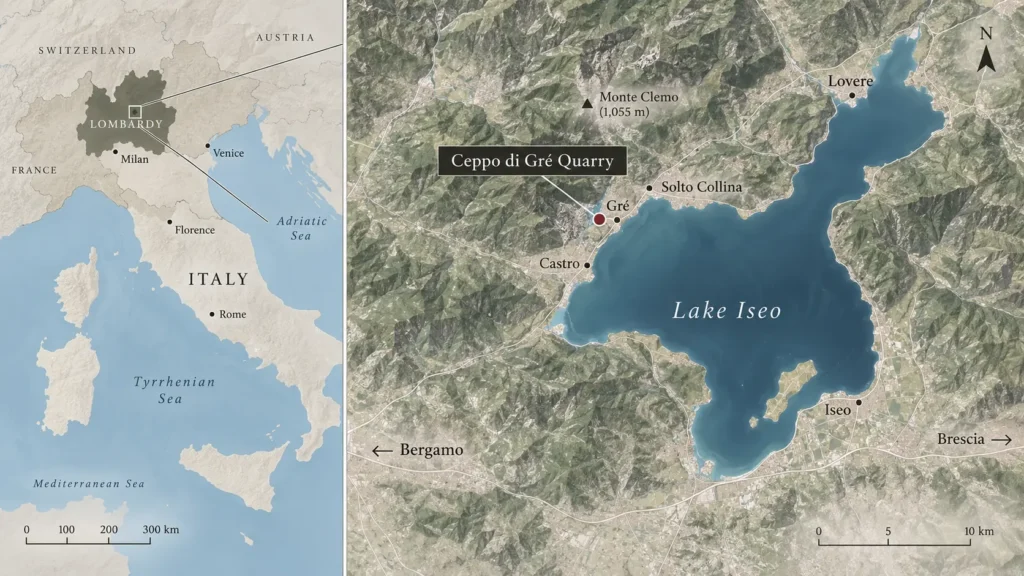
Ceppo di Gré is quarried near the small locality of Gré, on the western shore of Lake Iseo in Lombardy, northern Italy. The deposit lies near Castro and Solto Collina in the Province of Bergamo, at the foot of Monte Clemo. Unlike stones marketed under broad geographic names, authentic Ceppo di Gré is associated with this very specific geological deposit.
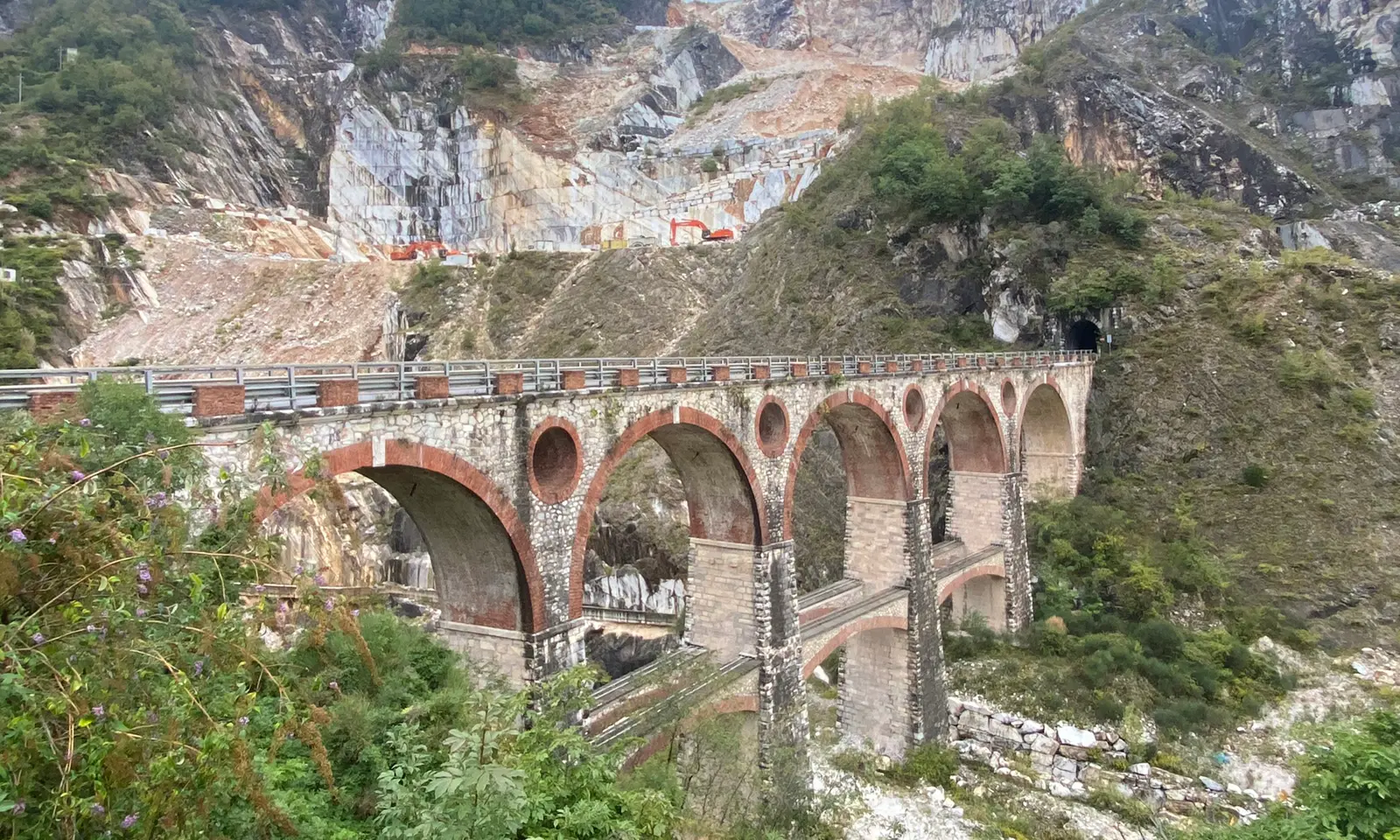
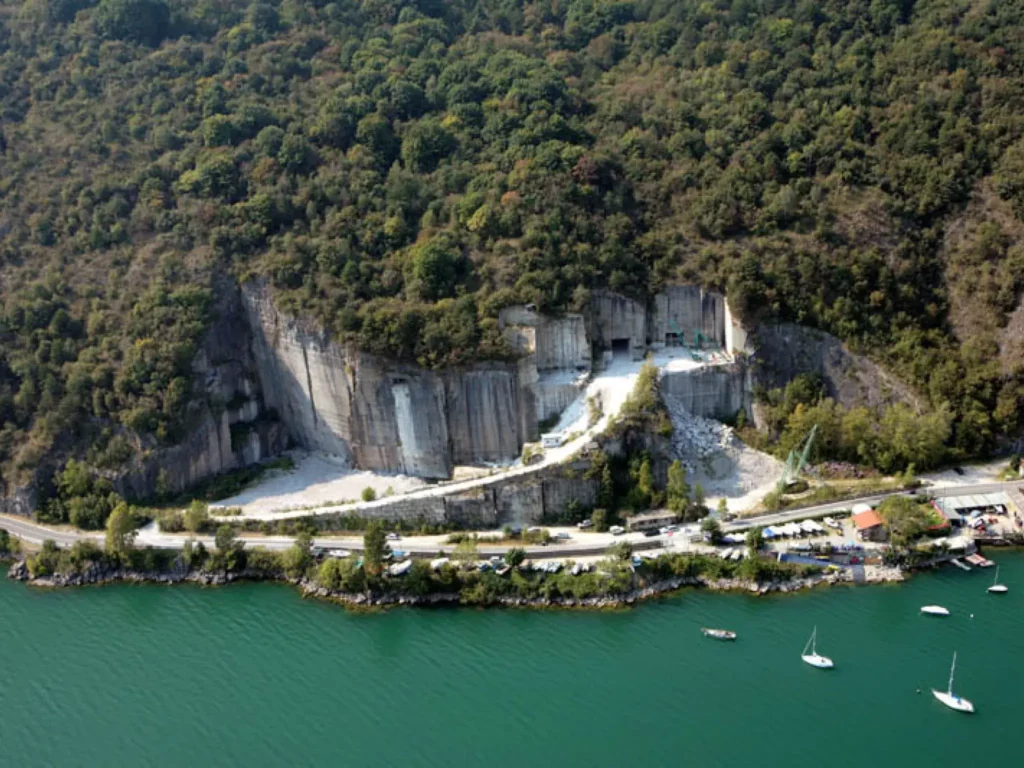
Historically, the stone was extracted from open quarries overlooking Lake Iseo, with blocks transported by boat across the lake for processing. Modern extraction has moved underground, allowing the same distinctive deposit to continue to be quarried while greatly reducing the visible impact of quarrying on the surrounding landscape.
The geology of this location is responsible for Ceppo di Gré’s unmistakable appearance—a gray natural stone filled with fragments of different sizes, shapes and shades that were naturally deposited and cemented together over geological time. This gives the material its characteristic aggregate-like appearance and explains why Ceppo di Gré can resemble terrazzo despite being entirely natural stone.
Ceppo Di Gre, the authentic Italian conglomerate charm from the shores of Lake Iseo. This striking silver-gray limestone features a dynamic matrix of embedded pebbles—smooth, rounded stones in varied sizes suspended in a subtle, textured binder—evoking the timeless beauty of ancient Lombard architecture. Stock available in our Los Angeles warehouse. Frost-resistant and durable, Ceppo di Gre adds organic sophistication to modern spaces, perfect for sleek countertops, statement floors, or exterior facades. Each slab is a unique geological narrative, honed for elegance and resilience.
A Quarrying History of More Than a Century
The history of Ceppo di Gré quarrying stretches back to the late 19th century. Historical documentation from the Bergamo Chamber of Commerce dates the exploitation of the Ceppo di Gré outcrops along the northwestern shore of Lake Iseo to 1896. In those early years, quarrying took place entirely in the open, relying on explosives and intensive manual labor to separate the stone from the mountainside.
The Marini family, whose connection to stoneworking began in 1897, established operations at Castro in 1913 and began extracting Ceppo di Gré. Early quarrymen used black powder to break the stone, squared the resulting blocks by hand, and transported them across Lake Iseo to sawmills for processing. During the 1920s, Giuseppe Marini established an industrial facility equipped with a sawmill capable of transforming the blocks into slabs, helping Ceppo di Gré find its way into important architectural projects throughout northern Italy.
Quarrying methods evolved considerably during the decades that followed. Open extraction progressed from explosives and manual labor to stepped quarry faces cut using helical wire. By the early 1990s, however, the future of the quarry was moving underground. Research begun in 1993 in collaboration with the University of Turin’s Department of Mining Engineering led to the adoption of underground extraction. Today, blocks are cut within galleries using diamond-chain cutting equipment.
Moving the quarry underground significantly reduced the visual and environmental impact of extraction on the mountainside above Lake Iseo while allowing continued access to the historic deposit. More than a century after commercial quarrying began, Ceppo di Gré continues to come from this remarkably specific location—connecting contemporary architecture with a stoneworking tradition that has developed along the shores of Lake Iseo for generations.
From Open Quarry to Underground Extraction
For much of the 20th century, Ceppo di Gré was extracted from open quarry faces overlooking Lake Iseo. As production advanced into the mountainside, the quarry created the dramatic exposed rock faces that remain visible above the lake today. Over time, improvements in quarrying technology replaced many of the earlier manual methods and explosives with more precise cutting techniques.
A major change began in 1993, when studies were undertaken in collaboration with the Department of Mining Engineering at the University of Turin to evaluate moving extraction underground. The transition allowed quarrying to follow the Ceppo di Gré deposit into the mountain rather than continuing to remove material from the exposed surface. Modern extraction now takes place primarily within underground galleries, where blocks are separated from the rock mass using diamond-chain cutting equipment.
The move underground has an important environmental benefit. It substantially reduces the visual impact of active quarrying on the steep, forested landscape surrounding Lake Iseo while allowing continued access to the historic stone deposit. According to the quarry operator, underground extraction also reaches material with improved technical characteristics compared with stone from the former open-pit workings.
Today, the old quarry faces remain part of the landscape and provide a visible record of more than a century of extraction, while much of the work required to produce contemporary Ceppo di Gré takes place inside the mountain and largely out of sight.
How Ceppo di Gré Was Formed
The distinctive appearance of Ceppo di Gré is the result of a geological process that began during the Lower to Middle Pleistocene, approximately 1.8 million to 125,000 years ago. By this time, the Alps were already largely formed, and erosion, water, ice and repeated rockfalls were continually reshaping the steep slopes surrounding what is now Lake Iseo.
At the foot of Monte Clemo, enormous quantities of broken dolomitic rock accumulated as debris fell from the mountainside. These deposits contained angular fragments ranging from small pieces only a few centimeters across to much larger clasts. Over time, successive rockfalls built thick deposits of this material in a natural depression along the slope.
Water then played an essential role in transforming this loose debris into stone. Rainwater and groundwater circulated through the accumulated material, depositing minerals that gradually cemented the individual fragments together. The result was a strongly consolidated dolomitic breccia composed predominantly of angular Norian dolomite fragments held together by a light-gray calcareous cement.
This geological history is visible in every slab. The seemingly random mixture of large and small fragments is not an applied pattern or manufactured aggregate—it is the preserved record of ancient rockfalls, erosion and natural cementation at the foot of Monte Clemo. That is what gives Ceppo di Gré its characteristic terrazzo-like appearance while making it an entirely natural stone.
Interior & Exterior Applications
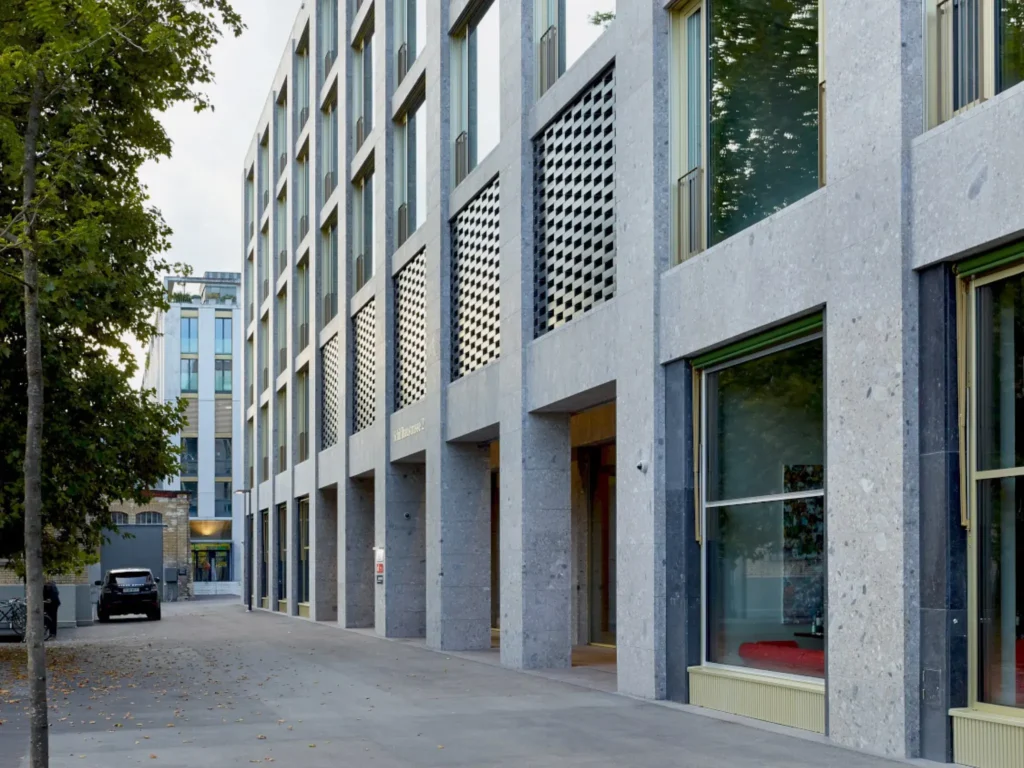
Ceppo di Gré has a long history as an architectural stone, and its combination of visual character and durability allows it to move naturally between interior and exterior applications. Its neutral gray palette works particularly well across large surfaces, while the varied fragments within the stone provide texture and detail without relying on conventional veining.
For interiors, Ceppo di Gré can be used for flooring, bathrooms and showers, wall cladding, fireplaces, countertops, vanities, stairways and custom architectural elements. Large-format installations emphasize the continuity of the material and allow the natural variation between larger and smaller fragments to become part of the design. It pairs especially well with wood, plaster, glass and metals such as brass, bronze and stainless steel.
Ceppo di Gré is equally at home on the exterior of a building. Its traditional uses include facade cladding, exterior paving, steps and other architectural surfaces exposed to the elements. The stone has documented resistance to weathering and freeze-thaw conditions, although the appropriate thickness, finish, anchoring system and installation method should always be selected for the specific project and climate.
Using Ceppo di Gré both inside and outside can also create a strong architectural connection between spaces. An exterior facade or entry can continue into an interior floor, feature wall or staircase, allowing the same natural stone to establish a consistent material language throughout a project.
Care & Maintenance
Ceppo di Gré is a durable natural stone, but its characteristically porous structure should be considered when specifying and maintaining the material. For interior installations, an appropriate penetrating sealer can help reduce the absorption of water, oils and other substances, particularly on countertops, vanities and other surfaces where staining may be a concern. The choice of sealer should be compatible with the selected finish and the intended application.
For routine cleaning, use a pH-neutral cleaner formulated for natural stone and avoid acidic or highly alkaline products. Acidic cleaners can react with the calcareous components of the stone and alter the surface finish. Abrasive cleaners should also be avoided on honed or other finely finished surfaces.
Ceppo di Gré’s natural porosity is part of the material rather than a defect. Depending on the desired appearance and application, larger surface voids may be filled during fabrication while smaller natural openings remain visible. The quarry produces several filled, honed and textured finishes specifically developed for different interior and exterior applications.
Exterior installations require maintenance appropriate to the environment, finish and exposure. Ceppo di Gré has a long record of exterior architectural use and documented resistance to frost and weathering, but proper detailing, drainage, setting materials and installation remain essential to long-term performance.
Technical Characteristics
Ceppo di Gré is classified as a strongly cemented dolomitic breccia composed predominantly of angular fragments of Norian dolomite held together by a light-gray calcareous cement. Despite its visibly porous structure, testing and its extensive architectural history demonstrate properties suitable for both interior and exterior applications.
Published technical testing reports an apparent density of approximately 2,478 kg/m³, uniaxial compressive strength of 54 MPa, and flexural strength of 6.3 MPa. After freeze-thaw testing, compressive strength was reported at 52 MPa, compared with 54 MPa before testing. The published water-absorption coefficient is 2.43%.
The relatively high water absorption reflects the stone’s macroscopic porosity. Interestingly, the technical study notes that this open porosity does not necessarily compromise freeze-thaw performance because it helps prevent water from remaining trapped within the pores where freezing could generate damaging pressure. The same study identifies Ceppo di Gré’s flexural and thermal-expansion characteristics as particularly appropriate for interior and exterior cladding.
Published Technical Data
Petrographic Classification: Dolomitic Breccia
Apparent Density: 2,478 kg/m³
Water Absorption: 2.43%
Compressive Strength: 54 MPa
Compressive Strength After Freeze-Thaw: 52 MPa
Flexural Strength: 6.3 MPa
Thermal Expansion: 9.3 × 10⁻⁶ mm/mm°C
Exterior Use: Suitable with appropriate finish, detailing and installation
Technical values are published reference data for Ceppo di Gré and should not replace project-specific testing or engineering requirements.