
Understanding resin treatment, reinforcement, and how modern technology has improved natural stone production.
When architects, designers, and homeowners visit a natural stone showroom, they see the finished product: polished marble, honed limestone, or quartzite slabs ready for fabrication.
What they don’t see is everything that happened before those slabs arrived.
Many natural stones undergo resin treatment during production. It’s a common practice, yet one that is frequently misunderstood. Some buyers assume a resin-treated slab must be inferior or that resin is simply being used to hide defects.
The reality is considerably more interesting.
To explore the subject, I contacted Dr. Daniel Sepulcre of RV NEORESINS, a company specializing in resin technology for natural stone processing. Daniel regularly shares technical information about stone production and generously contributed his expertise to this article.
Why Is Natural Stone Treated With Resin?
Natural stone is not a manufactured material with perfectly uniform characteristics.
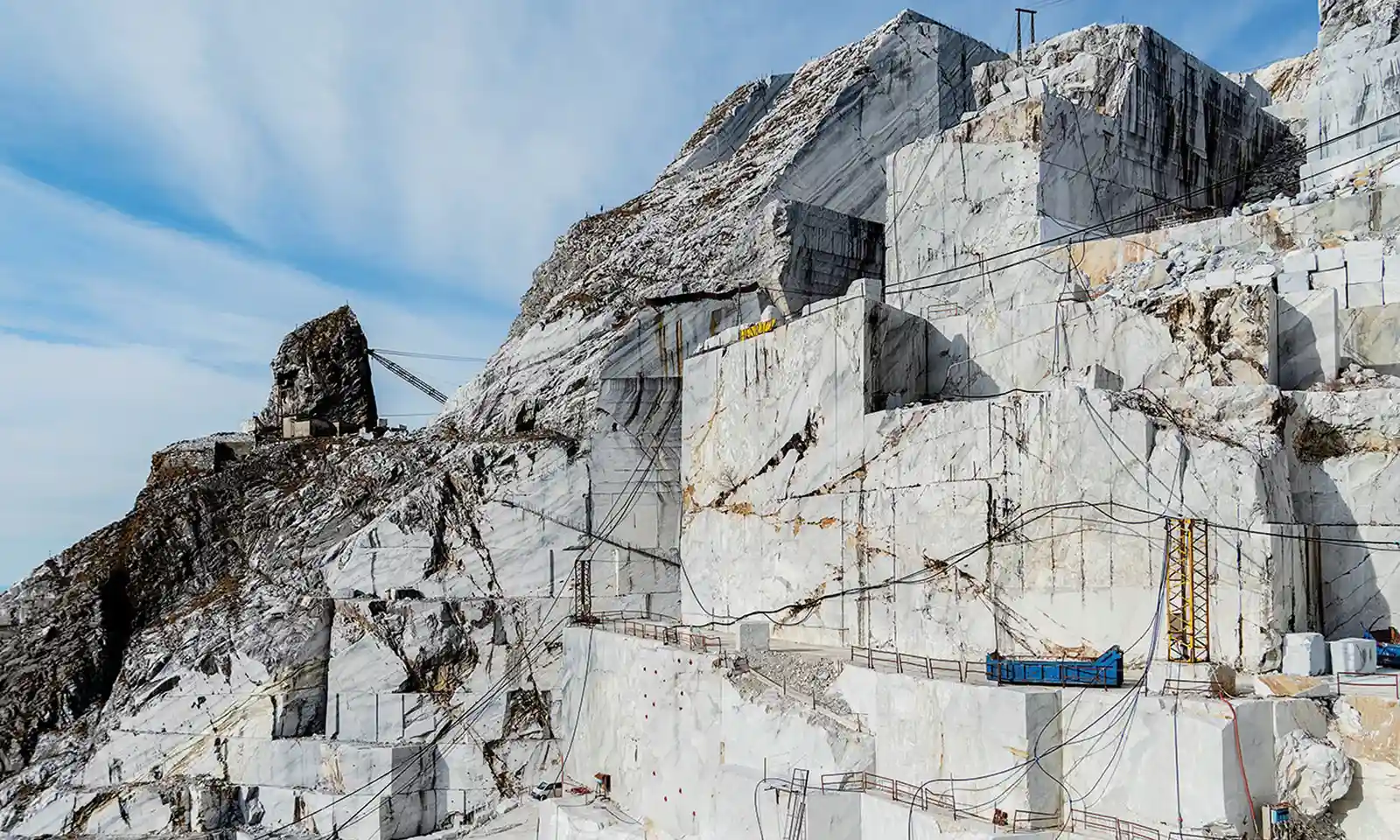
Marble, limestone, travertine, and other stones can contain natural fissures, cavities, mineral boundaries, and variations in structure developed through geological processes over millions of years.
I’ve told people for years: When nature does it, it’s a fissure. When we do it, it’s a crack.
During production, resin serves several purposes. It can fill natural openings, improve the finished surface, and reinforce the material.
As Dr. Sepulcre explains, these functions are related but not identical. Surface treatment can provide reinforcement, while fiberglass mesh or fabric bonded to the back of a slab offers additional support.
Some of the world’s most desirable marbles have complex veining and brecciated structures that benefit from these treatments.
Natural fissures are part of the character of many decorative marbles, including materials such as Arabescato Vagli marble. Modern resin systems help stabilize these features during processing without eliminating the stone’s natural appearance.
Resin technology allows producers to process materials that might otherwise be difficult to manufacture, transport, or fabricate in large slab form.
The presence of resin does not automatically indicate poor-quality stone. What matters is the material, the treatment, and its intended application.
Block Reinforcement: Before the Stone Is Sawn
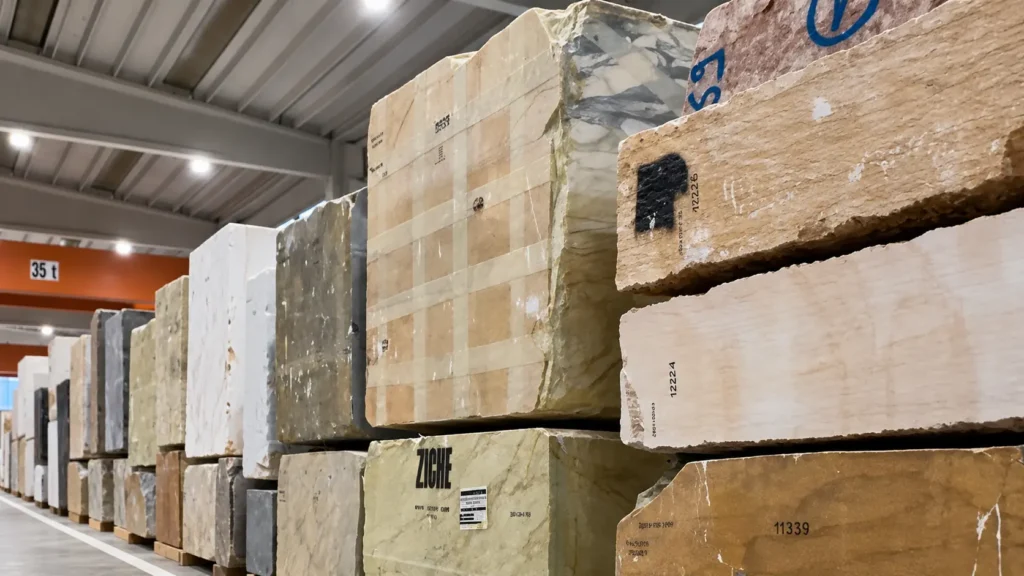
Resin treatment can begin before a quarried block is cut into slabs.
Some blocks contain natural structural characteristics that make sawing difficult. To help stabilize the material, factories may reinforce the exterior before processing.
Dr. Sepulcre describes one method involving a thixotropic epoxy adhesive (thick at rest but easier to spread when worked) applied together with fiberglass reinforcement.
This allows the adhesive to remain in place on the vertical sides of a large stone block while the reinforcement is applied and the resin cures.
The treatment helps stabilize the block during sawing, when considerable mechanical forces are involved.
Slab Treatment: After the Stone Is Cut
Once the block has been sawn, individual slabs may receive additional treatment.
Depending on the material, resin can be applied to the visible face, the back, or both.
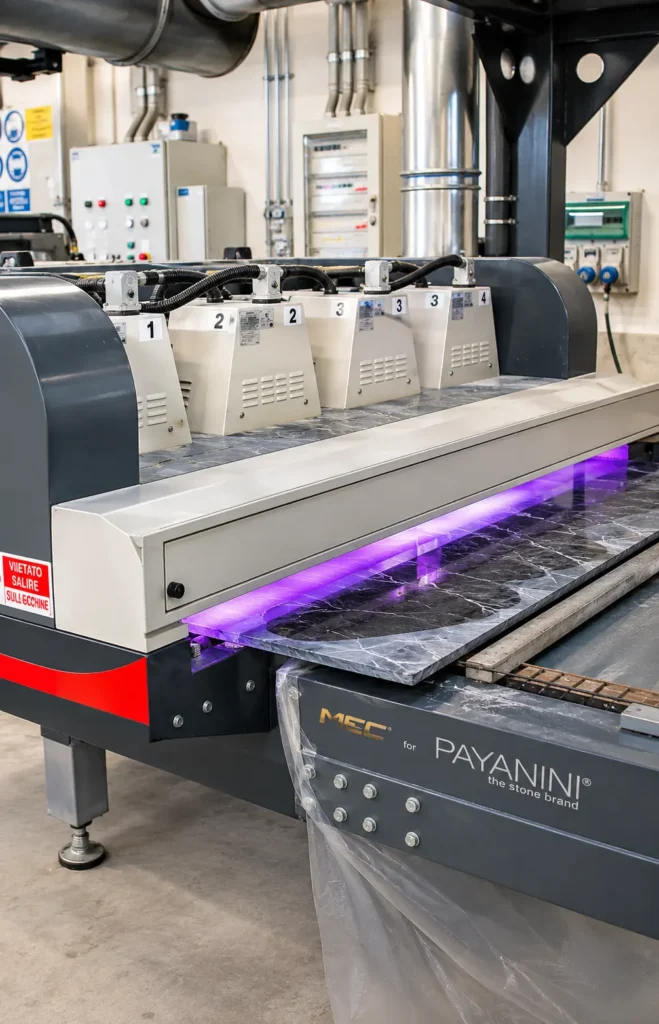
Surface treatment improves the continuity and appearance of the finished stone. Back reinforcement, typically using fiberglass mesh or fabric bonded with epoxy resin, can provide substantial additional reinforcement, improving the slab’s ability to withstand the stresses of handling, transportation, and fabrication.
Calacatta Borghini, one of the most prized Italian marbles on the market, is treated with resin.
I’ve noticed the difference over my 35-plus years in the stone business.
When I started, warehouse crews handled slabs with extraordinary care. Today, I sometimes watch slabs being moved in ways that would have made me very nervous years ago. Modern reinforcement has helped make many materials more resilient during handling.
I admit, I still get nervous watching!
Block and slab treatments serve different purposes and may be used together. The factory selects the appropriate process based on the characteristics of the stone.
Why Moisture Control Is So Important
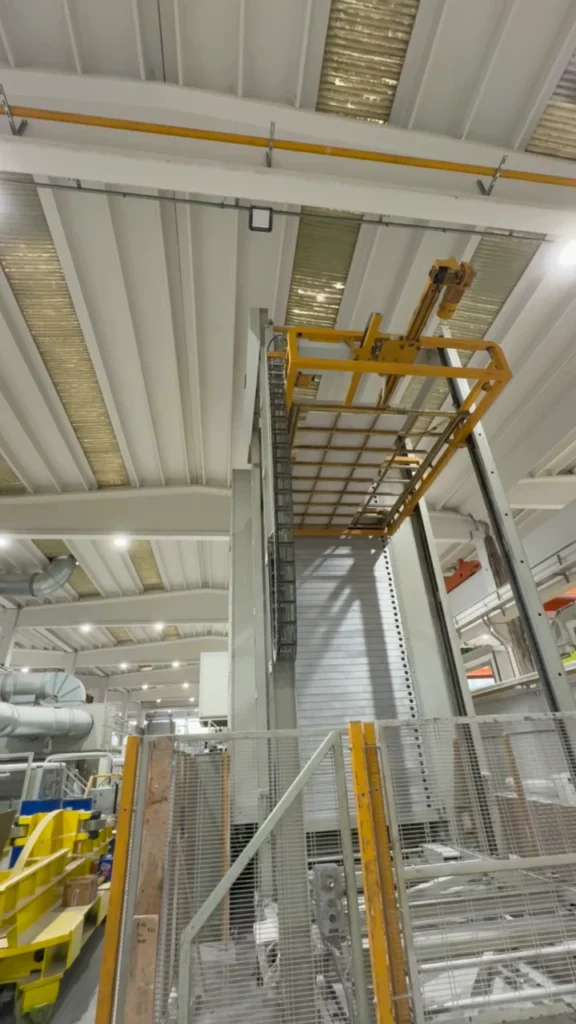
One of the most important considerations in resin treatment is moisture.
Stone slabs retain water from sawing, washing, and other production operations. Excess moisture can interfere with resin penetration and adhesion, even when the resin itself is correctly formulated.
Factories therefore use drying equipment designed around their production processes.
In one of his technical newsletters, Dr. Sepulcre describes an accumulator oven, a vertical system containing multiple trays of slabs. Air circulates at approximately 50°C (122°F), with slabs remaining inside for around an hour as part of the drying process.
Other factories use different equipment and drying methods.
Interestingly, Daniel points out that some modern resin formulations are specifically designed to adhere to slightly damp stone.
The key is matching the resin to the moisture conditions, drying equipment, and curing process.
Successful treatment requires considerably more technical knowledge than simply applying epoxy to stone.
Does Resin Treatment Allow Natural Stone to Breathe?
In the stone business, we often refer to a material’s ability to release moisture vapor as allowing it to “breathe.”
This is particularly important in flooring and other installations where moisture may be present.
According to Dr. Sepulcre, conventional surface resin treatment generally has minimal effect on this process.
During polishing, most of the cured resin is removed from the face of the slab. It remains primarily within the stone’s natural openings, where even relatively small amounts can contribute significantly to reinforcement.
Fiberglass backing is different.
When resin and fiberglass are applied across the back of a slab, they create an impermeable layer. However, the exposed stone face is not covered by that backing.
This distinction becomes important when considering protective coatings applied after installation.
I’ve seen natural stone deteriorate when waxes and other topical treatments restrict moisture evaporation. It’s a concern I’ve encountered in heavily maintained commercial installations, including Las Vegas casinos.
When moisture cannot escape through an impermeable surface coating, deterioration can occur over time.
Dr. Sepulcre confirms that certain protective coatings and anti-graffiti treatments can create these problems when they restrict moisture transmission.
He also explains that RV NEORESINS has developed protective treatments intended to avoid these issues.
Resin reinforcement and topical protective coatings are different products serving different purposes.
The important consideration is whether the treatment and installation allow moisture to be managed appropriately.
How Has Resin Technology Improved?
Resin technology has advanced substantially over the past several decades.
According to Dr. Sepulcre, modern formulations offer improvements in durability, resistance to yellowing, reduced shrinkage, and lower solvent emissions.
Manufacturers can also select products with different levels of transparency, viscosity, working time, and adhesion.
For example, a resin designed to penetrate fine surface openings requires different properties from an adhesive used to reinforce a large stone block.
It’s not simply a matter of choosing a good resin. It’s about choosing the right resin for the particular application.
These advancements have helped factories achieve more consistent results while expanding the range of natural stones that can be processed successfully.
Will Resin-Treated Stone Change Color Over Time?
Modern formulations offer improved resistance to yellowing, an important consideration for light-colored marble and installations exposed to natural light.
However, Dr. Sepulcre cautions that resistance to yellowing should not be interpreted as a guarantee that a material’s appearance will never change.
Long-term performance depends on the stone, the resin system, and the conditions of use.
For particularly demanding applications, representative testing remains advisable.
What These Advancements Mean for Architects and Designers
Perhaps the greatest benefit of modern resin technology is the freedom it has given architects and designers.
Stones with dramatic veining, unusual geological structures, and distinctive colors can now be processed into slabs that would have been much more difficult to produce using older methods.
Advancements in reinforcement and resin chemistry have improved manufacturing consistency and helped make a broader selection of natural stones available for architectural applications.
Architects and designers don’t need to understand the chemistry behind these processes. That’s the responsibility of the manufacturers and technical specialists who develop and apply them.
Working with knowledgeable stone suppliers and fabricators helps ensure that the selected material is appropriate for its intended use.
Rather than limiting natural stone, modern resin technology has expanded the possibilities for designing with it.
Understanding the Stone Beyond Its Appearance
After more than 35 years in the stone business, I’ve seen how much attention is given to the appearance of a slab and how little is sometimes known about its production.
Two slabs can look equally beautiful in a showroom while having undergone very different manufacturing processes.
That doesn’t necessarily make one better than the other.
Resin treatment has become an important part of modern stone production, helping manufacturers bring an extraordinary variety of natural materials to market.
Like any manufacturing process, its success depends on the material, the technology, and the quality of execution.
The presence of resin is not, by itself, a measure of stone quality. Understanding why it was used is far more useful.
Technical Contributor: Dr. Daniel Sepulcre, RV NEORESINS
The World of Stone would like to thank Dr. Daniel Sepulcre, Chief Executive Officer of RV NEORESINS, S.L., for generously sharing his technical expertise and contributing to this article.
Based in Novelda, Spain, Dr. Sepulcre leads a company specializing in epoxy resin systems and reinforcement solutions for natural stone production.
Through his educational newsletters, he helps explain the chemistry and manufacturing processes behind modern stone reinforcement.
His contributions to this article include insights into resin technology, block and slab reinforcement, moisture control, and the performance of treated natural stone.
Learn more about RV NEORESINS: https://rvneoresins.com/en/
Article prepared by The World of Stone, Los Angeles, with technical contributions from Dr. Daniel Sepulcre of RV NEORESINS.