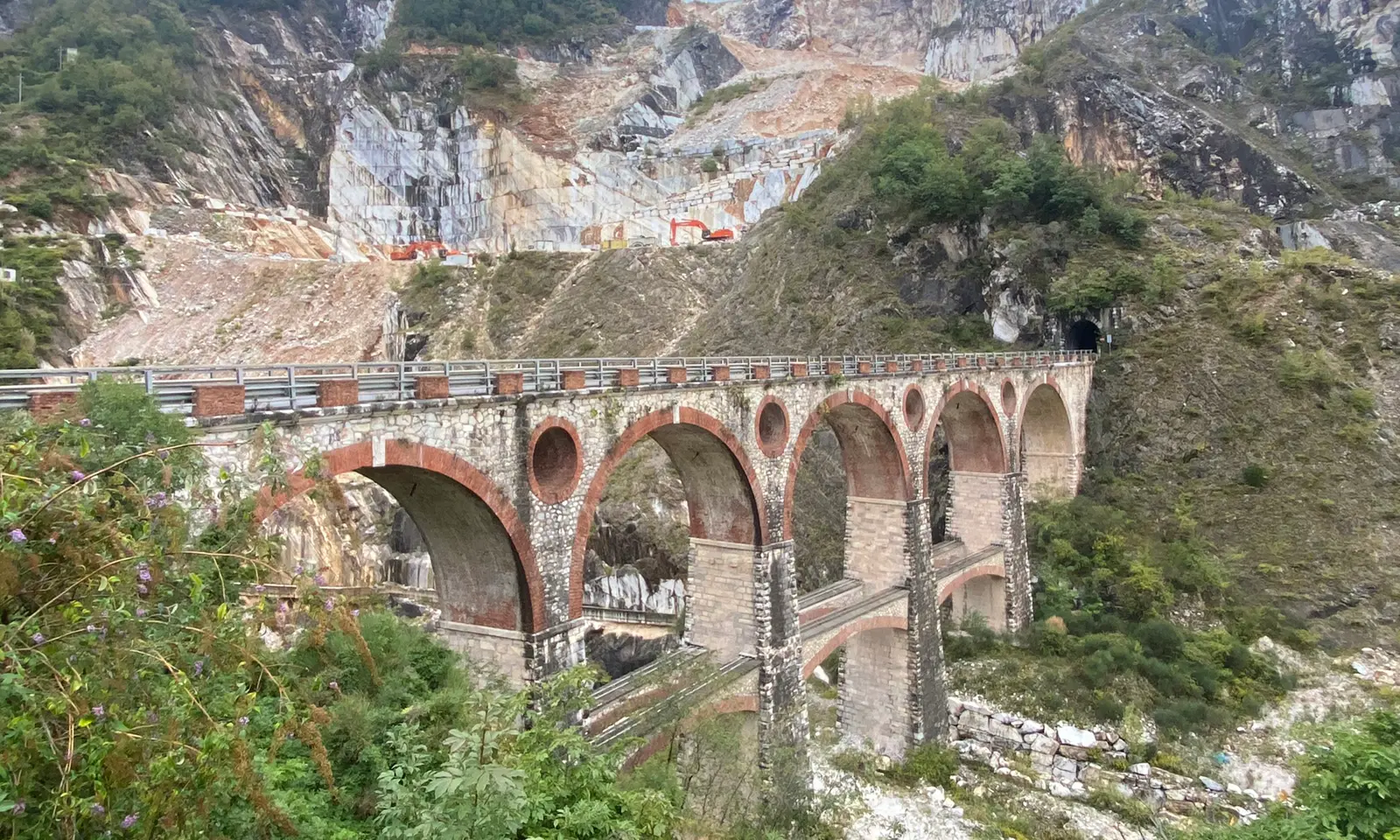

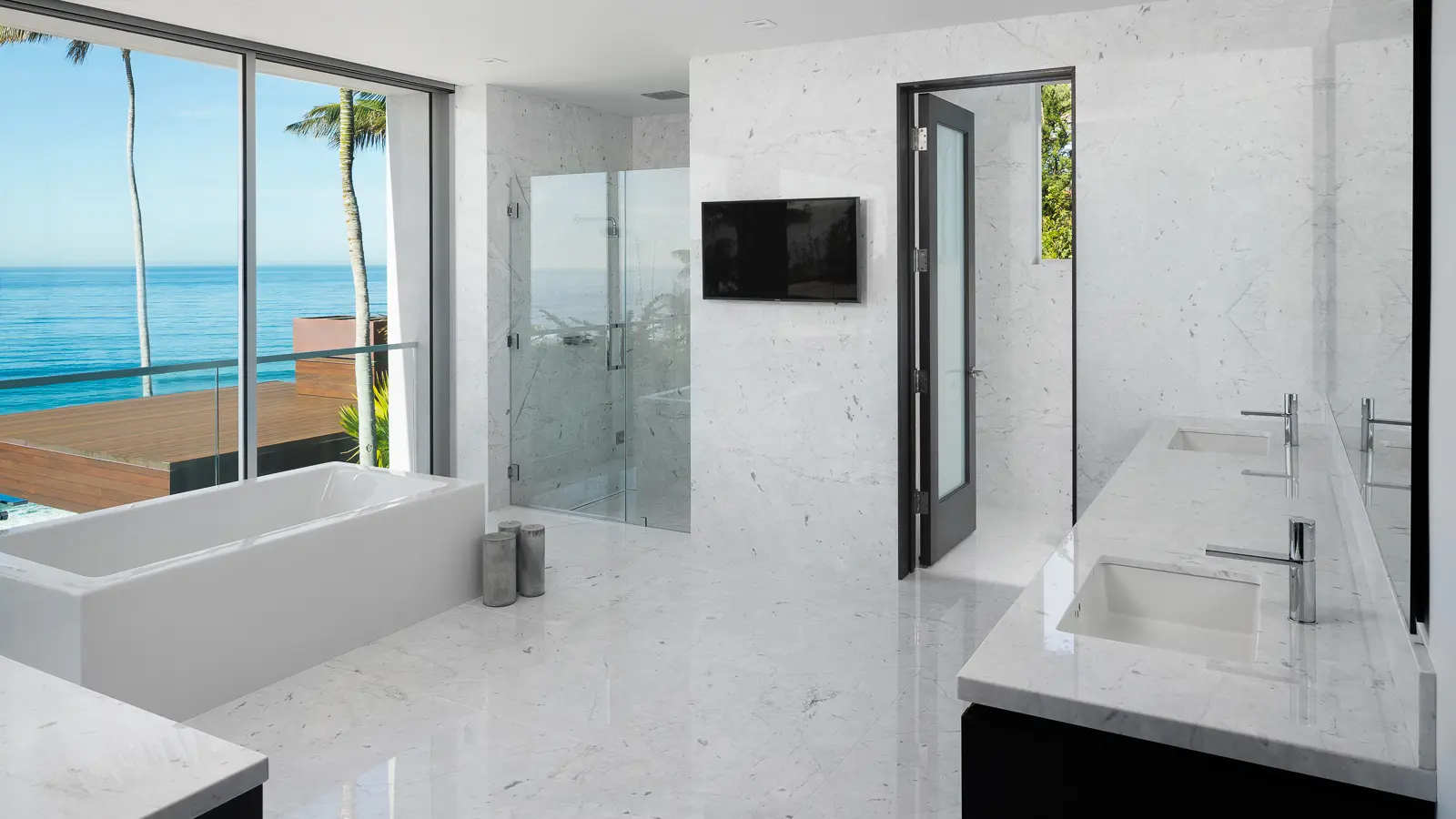
Perfection Is the Imperfections
Nature does not manufacture imperfections. It creates something far more interesting.
Over my 35 years in the natural stone industry, I’ve encountered countless extraordinary materials. I’ve also encountered an interesting contradiction: people are drawn to natural stone precisely because it is unique, yet sometimes expect it to possess the uniformity and consistency of a manufactured product.
Natural stone is not manufactured. It is formed over millions of years through geological processes involving heat, pressure, mineral deposits, and the movement of the earth itself. Every slab carries evidence of that history.
Veins, fissures, mineral inclusions, changes in color, and occasional voids are not necessarily imperfections. They are part of the stone’s geological identity.
In many cases, these characteristics are exactly what make a particular stone desirable.
Nature’s Signature
Consider a dramatic marble with sweeping veins, a quartzite with unexpected mineral formations, or a limestone containing ancient fossils.
We admire these materials because nature has created something that cannot be precisely duplicated.
Yet the very processes responsible for their beauty can also produce variations that some might initially question.
A fissure may follow the boundary between mineral formations. A small void may be the result of the stone’s geological development. An unexpected inclusion may introduce a color or texture not present elsewhere in the slab.
These are not necessarily reasons to reject a material. Often, they are reasons to appreciate it.
I’ve frequently used the expression “the inherent beauty of natural stone” when discussing these characteristics with clients.
It is more than a convenient phrase. It reflects an understanding of what we are purchasing.
Perfection Is the Imperfections
Not every natural stone appeals to every person, nor should it. Beauty is subjective, and personal preference plays an important role in selecting materials for a home or project.
Over the years, I’ve shown clients stones that I find absolutely extraordinary, only to discover that they don’t share my enthusiasm. That’s perfectly fine. I don’t take it personally.
What I do take issue with is the assumption that an unusual vein, mineral inclusion, natural fissure, or variation in color somehow makes a stone imperfect or of lesser quality.
In natural stone, perfection is the imperfections.
These characteristics are not necessarily flaws to be excused. They are part of what nature created. The very same inclusion that one person finds distracting may be precisely what another person finds beautiful.
There is a difference between a stone that is structurally unsound or unsuitable for its intended purpose and one that simply doesn’t meet someone’s aesthetic preferences.
One is a legitimate question of quality or suitability. The other is a matter of taste.
We don’t have to love every stone. But we should appreciate that nature didn’t make a mistake simply because it created something we wouldn’t choose.
The Role of Stone Processing and Finishing
There is another aspect of natural stone that is not always fully understood.
Many stones undergo treatments during processing that help prepare them for architectural use.
Depending on the material, these may include resin impregnation, filling of natural voids, reinforcement, polishing, honing, or other finishing processes.
These techniques are not necessarily attempts to conceal inferior stone. They are established methods of working with a natural material, enhancing its presentation, and preparing it for its intended application.
A filled void does not automatically indicate a defective slab. A properly treated fissure does not necessarily diminish the stone’s beauty or usefulness.
What matters is understanding the material, the treatment it has received, and whether it is appropriate for the intended installation.
There is, of course, an important distinction between a natural characteristic and a structural defect. Not every fissure is harmless, and not every stone is appropriate for every application.
That is where experience, proper evaluation, and responsible material selection become essential.
Expectations Versus Reality
Today’s homeowners and designers have access to an extraordinary range of natural materials from around the world.
High-resolution photography, carefully staged interiors, and digitally enhanced images can create expectations of absolute consistency.
But a photograph captures a moment, a particular slab, and a particular lighting condition. It cannot fully communicate the depth, movement, texture, and variation of natural stone.
Even slabs extracted from the same block may differ.
A vein may become more pronounced. A mineral inclusion may appear unexpectedly. A background color may shift subtly from one end of the block to the other.
These variations are not evidence that nature has failed to meet a specification.
They are reminders that we are working with something genuinely natural.
This is also why viewing and selecting actual slabs is so important, particularly for projects involving highly figured or exotic materials.
No Two Stones Are Alike. That’s the Point.
If absolute uniformity is the objective, there are excellent manufactured products designed to deliver it.
Natural stone offers something different.
It offers individuality.
The marble selected for a kitchen island may contain a mineral formation that exists nowhere else in the world in precisely the same arrangement. A limestone floor may reveal fossils that have remained hidden for millions of years. A dramatic quartzite may display colors and movement that no manufactured surface can truly reproduce.
These are qualities worth celebrating.
They give a project identity and create a connection to the natural world that goes beyond decoration.
Learning to Appreciate What Nature Provides
Those of us who work with natural stone have a responsibility to help clients understand what they are selecting.
That means being candid about natural variation, explaining the role of filling and reinforcement, identifying characteristics that may affect performance, and helping designers choose materials appropriate for their projects.
It also means encouraging a different way of looking at stone.
Rather than asking whether every inch is perfectly uniform, perhaps we should ask what makes a particular slab extraordinary.
Rather than seeing every inclusion as a potential objection, perhaps we should consider the geological history it represents.
Natural stone should be evaluated carefully, selected thoughtfully, and installed properly.
But it should not be expected to behave or appear like something manufactured.
After all, the very reason we choose natural stone is that nature has already done the designing.
The World of Stone | Los Angeles
Bringing more than 35 years of natural stone experience to architects, designers, and distinctive projects.